Analysers Filter
In signal processing, people use analyzer filters to measure and analyze the frequency response of a system. Audio and music producers commonly use it to enhance sound quality. The analyzer filter comprises an input section, a filter section, and an output section. The signal to be analyzed enters the input section, while the filter section separates it into different frequency bands for performing the actual analysis. The output section then displays the results of the analysis in a visual format, such as a spectrum analyzer.
One of the most common uses of an analyzer filter is in the equalization of audio signals. By analyzing the frequency response of a sound system, engineers can identify problem frequencies and use the analyzer filter to adjust the equalization settings accordingly. This can result in a clearer, more balanced sound that is free from unwanted resonances or other distortions.
Another application of analyzer filters is in the field of vibration analysis.
By measuring the vibrations of a mechanical system, engineers can use the analyzer filter to determine the frequency response of the system and identify any resonant frequencies that may be causing problems. We can use this information to design solutions that reduce or eliminate these vibrations.
In the field of telecommunications, analysts commonly use analyzer filters to analyze and filter the frequency spectrum of signals. This allows engineers to identify and eliminate interference from other signals, resulting in clearer, more reliable communication.
Overall, analyzer filters are a powerful tool in signal processing that can be used to analyze and improve the performance of a wide range of systems. Whether used in audio production, vibration analysis, or telecommunications, these filters are an essential component of modern signal processing technology.
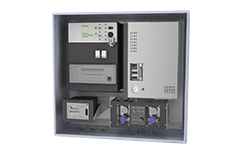
Teledyne Analytical Instruments 6000/6400TSG
Teledyne Analytical Instruments 6000/6400TSG details: The 6400TSG series utilizes our field-proven ultraviolet (UV) fluorescence technology to continuously monitor the total sulfur content found in process
Teledyne Analytical Instruments 6000/6400TSL
Teledyne Analytical Instruments 6000/6400TSL details: The 6400TSG series utilizes our field-proven ultraviolet (UV) fluorescence technology to continuously monitor the total sulfur content found in process
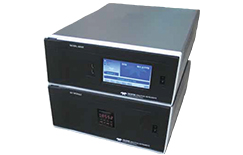
Teledyne Analytical Instruments 6200T
Teledyne Analytical Instruments 6200T details: The Model 6200T Total Sulfur Analyzer utilizes proven UV fluorescent technology to continuously detect sulfur found in inert gas streams.
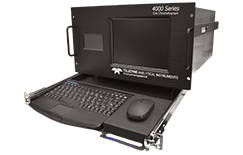
Teledyne Analytical Instruments 4000 Series
Teledyne Analytical Instruments 4000 Series details: The 4000 Series GC leverages state-of-the-art Chromperfect® operating software to virtually eliminate misidentification and drastically reduces the need for
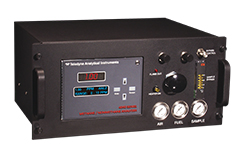
Teledyne Analytical Instruments 4040
Teledyne Analytical Instruments 4040 details: The Model 4040 is a microprocessor-based, oven heated methane/non-methane gas analyzer designed to measure varieties of hydrocarbon concentrations from a
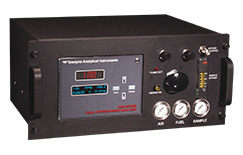
Teledyne Analytical Instruments 4020
Teledyne Analytical Instruments 4020 details: The Model 4020 uses a field-proven FID detector to measure THC in various streams. This instrument is ideal for monitoring
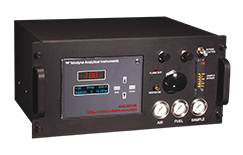
Teledyne Analytical Instruments 4030
Teledyne Analytical Instruments 4030 details: The Model 4030 uses a field proven FID detector in a heated chamber. The chamber is heated to a high
Teledyne Analytical Instruments 4080
Teledyne Analytical Instruments 4080 details: Basic 4020 with sample system including stripper to measure total hydrocarbons in an aqueous sample.
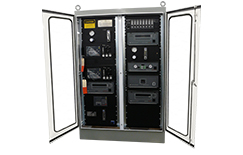
Teledyne Analytical Instruments CDQC
Teledyne Analytical Instruments CDQC details: Teledyne’s Carbon Dioxide Quality Control (CDQC) system offers an integrated package to continuously monitor impurities in carbon dioxide (CO2). The
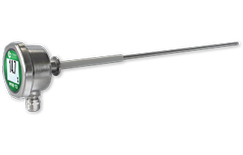
Dr Foedisch PFM 13
Dr Foedisch PFM 13 details: Filter Monitoring-Continuous, tribo-electric in-situ measurement for qualitative monitoring of exhaust gas. The PFM 13 serves the permanent control of dust
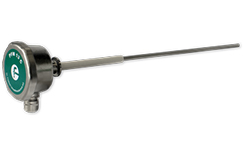
Dr Foedisch PFM 13 C
Dr Foedisch PFM 13 C details: Filter Monitoring-Continuous, tribo-electric in-situ measurement for qualitative monitoring of exhaust gas. TThe PFM 13 C serves the permanent control
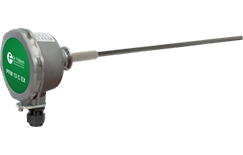
Dr Foedisch PFM 13 EX
Dr Foedisch PFM 13 EX details: Filter Monitoring-Highly sensitive system for continuous, tribo-electric in-situ measurement in potentially explosive atmospheres. The PFM 13 C EX serves
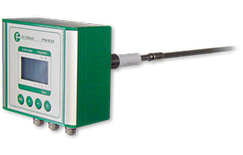
Dr Foedisch PFM 02 EX
Dr Foedisch PFM 02 EX details: Filter Monitoring-Continuous, tribo-electric in-situ measurement with real-time monitoring of dust emissions. The PFM 02 EX serves the permanent control
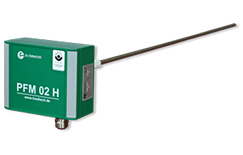
Dr Foedisch PFM 02 HB
Dr Foedisch PFM 02 HB details: The residual dust sensor PFM 02 HB, purpose-built for the woodworking industry, is developed for the monitoring of filter
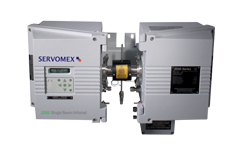
Servomex SERVOTHOUGH SPECTRAEXACT 2500
Servomex SERVOTHOUGH SPECTRAEXACT 2500 details: Servomex’s iconic industry-leading rugged Photometric analyzer delivers flexible single and multicomponent gas analysis capability for corrosive, toxic and flammable sample
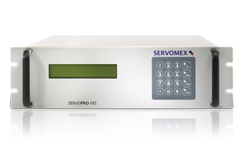
Servomex SERVOPRO FID
Servomex SERVOPRO FID details: A Flame Ionization Detector analyzer designed to assure safe operation for cryogenic ASU. The FID ensures the level of Total Hydrocarbons
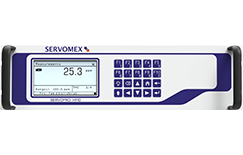
Servomex SERVOPRO HFID
Servomex SERVOPRO HFIDSERVOPRO HFID details: Using a highly sensitive heated Flame Ionization Detector (HFID) for measuring volatile hydrocarbon concentrations in industrial or vehicle emission applications.