Analysers Filter
In signal processing, people use analyzer filters to measure and analyze the frequency response of a system. Audio and music producers commonly use it to enhance sound quality. The analyzer filter comprises an input section, a filter section, and an output section. The signal to be analyzed enters the input section, while the filter section separates it into different frequency bands for performing the actual analysis. The output section then displays the results of the analysis in a visual format, such as a spectrum analyzer.
One of the most common uses of an analyzer filter is in the equalization of audio signals. By analyzing the frequency response of a sound system, engineers can identify problem frequencies and use the analyzer filter to adjust the equalization settings accordingly. This can result in a clearer, more balanced sound that is free from unwanted resonances or other distortions.
Another application of analyzer filters is in the field of vibration analysis.
By measuring the vibrations of a mechanical system, engineers can use the analyzer filter to determine the frequency response of the system and identify any resonant frequencies that may be causing problems. We can use this information to design solutions that reduce or eliminate these vibrations.
In the field of telecommunications, analysts commonly use analyzer filters to analyze and filter the frequency spectrum of signals. This allows engineers to identify and eliminate interference from other signals, resulting in clearer, more reliable communication.
Overall, analyzer filters are a powerful tool in signal processing that can be used to analyze and improve the performance of a wide range of systems. Whether used in audio production, vibration analysis, or telecommunications, these filters are an essential component of modern signal processing technology.
Select your options here?
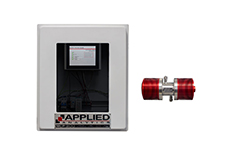
Applied Analytics Infrared Photometer – MICROSPEC MCP-200
The MCP-200 is a real-time concentration monitor for chemical species that absorb IR radiation. From the MicroSpec series comes the MCP-200, a concentration monitor for

Process Insights Extrel VeraSpec APIMS-SX5
The VeraSpec APIMS-SX5 gives up to 5 stream selection options for automatic monitoring of ppt-level impurities in different bulk gases.

Process Insights Extrel MAX300-LG
EXTREL™ MAX300-LG™ brings an unmatched combination of speed, sensitivity, and precision to continuous, quantitative gas analysis.

Process Insights Extrel VeraSpec APIMS
The VeraSpec APIMS is a quadrupole-based mass spectrometer with atmospheric pressure ionization source designed for ultra-high sensitivity detection of trace-level impurities in UHP gases. The
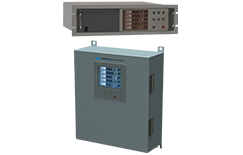
Teledyne Analytical Instruments 7500ZA/ZB
Teledyne Analytical Instruments 7500ZA/ZB details: The 7500Z and 7600Z Series Infrared (IR) Analyzers are capable of detecting up to four chosen, individual IR absorbing components.
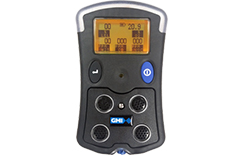
Teledyne Gas and Flame PS500
Teledyne Gas and Flame PS500 details: Personal Safety Gas Monitors-The PS500 can be configured to detect up to five gases. It does this with its
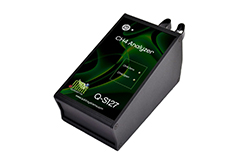
Qubit S127 CH4 Analyzer
Qubit S127 CH4 Analyzer details: Methane Analyzer-Qubit Systems provides a low level Methane Analyzer 0-100ppm. The analyzer uses a sensor with a metal oxide semiconductor
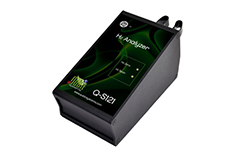
Qubit S128 Methane Analyzer
Qubit S128 Methane Analyzer details: Methane Analyzer-Qubit S128 Methane Analyzer uses state of the art non-dispersive infrared technology (NDIR) to measure methane levels in a
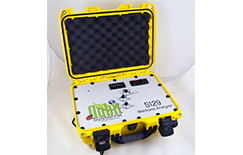
Qubit S129 Methane Analyzer
Qubit S129 Methane Analyzer details: Methane Analyzer-Qubit S129 Methane Analyzer is a non-dispersive infrared (NDIR) gas analyzer that measures methane levels in a flowing gas