Analysers Filter
In signal processing, people use analyzer filters to measure and analyze the frequency response of a system. Audio and music producers commonly use it to enhance sound quality. The analyzer filter comprises an input section, a filter section, and an output section. The signal to be analyzed enters the input section, while the filter section separates it into different frequency bands for performing the actual analysis. The output section then displays the results of the analysis in a visual format, such as a spectrum analyzer.
One of the most common uses of an analyzer filter is in the equalization of audio signals. By analyzing the frequency response of a sound system, engineers can identify problem frequencies and use the analyzer filter to adjust the equalization settings accordingly. This can result in a clearer, more balanced sound that is free from unwanted resonances or other distortions.
Another application of analyzer filters is in the field of vibration analysis.
By measuring the vibrations of a mechanical system, engineers can use the analyzer filter to determine the frequency response of the system and identify any resonant frequencies that may be causing problems. We can use this information to design solutions that reduce or eliminate these vibrations.
In the field of telecommunications, analysts commonly use analyzer filters to analyze and filter the frequency spectrum of signals. This allows engineers to identify and eliminate interference from other signals, resulting in clearer, more reliable communication.
Overall, analyzer filters are a powerful tool in signal processing that can be used to analyze and improve the performance of a wide range of systems. Whether used in audio production, vibration analysis, or telecommunications, these filters are an essential component of modern signal processing technology.

Process Insights Tiger Optics T-I Max HF
The T-I Max product line is designed for ultra-trace impurity detection in semiconductor fabs. Airborne molecular contamination (AMC) in cleanrooms, reticle storage, FOUP cleaning tools


Process Insights Tiger Optics T-I Max CEM
Excellent sensitivity and outstanding speed of response allow these analyzers to measure emissions from coal-fired power plants, cement kilns, and other sources requiring high dilution

Process Insights Tiger Optics HALO 3 HF
This analyzer specializes in monitoring hydrogen fluoride (HF) impurities down to sub-ppb levels in fluorinated specialty gases, as well as common inert bulk gases.

Process Insights Tiger Optics HALO RP HF
This HALO RP model detects hydrogen fluoride impurities in low-pressure chambers and semiconductor process tools down to 50 Torr of pressure.
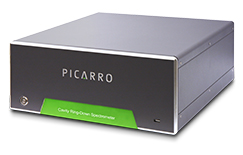
Picarro G2205
Picarro G2205 details: Trace gas analyser-The Picarro G2205 gas concentration analyzer provides precise, real-time measurement of hydrogen fluoride (HF) and water (H2O) vapor at parts-per-trillion
Picarro G2910
Picarro G2910 details: Trace gas analyser-The Picarro G2910 supports measurements over a broad range of ethylene oxide (EtO) concentrations, with support for complex gas mixtures,