Applied Analytics Infrared Photometer – MICROSPEC MCP-200
The MCP-200 is a real-time concentration monitor for chemical species that absorb IR radiation. From the MicroSpec series comes the MCP-200, a concentration monitor for

Applied Analytics OMA Process Analyzer -OMA-300 Standard
The OMA Process Analyzer continuously measures chemical concentrations and physical properties that can be correlated from 200-800nm (UV-Vis), 400-1100nm (SW-NIR) or 1550-1850nm (InGaAs) absorbance spectrum.
Applied Analytics OMA Process Analyzer -OMA-406P
The OMA Process Analyzer continuously measures chemical concentrations and physical properties that can be correlated from 200-800nm (UV-Vis), 400-1100nm (SW-NIR) or 1550-1850nm (InGaAs) absorbance spectrum.

Applied Analytics OMA Process Analyzer -OMA-206P
The portable version of the OMA Process Analyzer is housed in an ultra-rugged suitcase enclosure, so you can bring analytics from site to site with

Process Insights Extrel MAX300-TGM
The MAX300-TGM was specifically designed for toxic gas monitoring in ambient air. With fast measurements and high sensitivity this multi-channel, multi-sample point analyzer provides stable
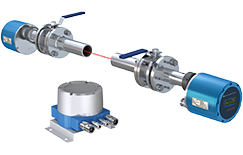
Teledyne Analytical Instruments Model LGA-4000Z
Teledyne Analytical Instruments Model LGA-4000Z details: Teledyne’s LGA-4000Z series leverages the latest in Tunable Diode Laser Absorption Spectroscopy (TDLAS). This is to achieve an ultra-fast
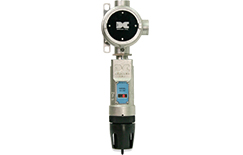
Teledyne Gas and Flame CX SMART – CX-DM
Teledyne Gas and Flame CX SMART – CX-DM details: Fixed Wireless – Detcon Model CX-DM gas detection sensors are easily and economically deployable in both
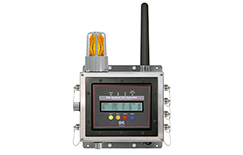
Teledyne Gas and Flame CX SMARTWIRELESS -CXT-DM
Teledyne Gas and Flame CX SMARTWIRELESS -CXT-DM details: Fixed Wireless – Detcon Model CXT-DM SmartWireless’ gas detection sensors are easily and economically deployable in both
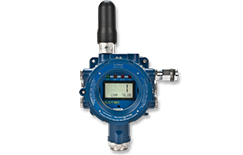
Teledyne Gas and Flame OLCT 80Wireless
Teledyne Gas and Flame OLCT 80Wireless details: Fixed Wireless – Teledyne Gas & Flame Detection is proud to introduce its wireless system with the OLCT
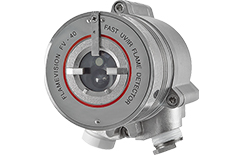
Teledyne Gas and Flame 40 Series
Teledyne Gas and Flame 40 Series details: Fixed Flame Detectors-The MultiFlame FV-40 includes the latest technology for the best detection and resistance to false alarms,
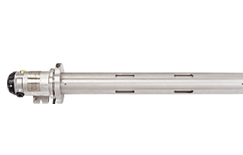
Teledyne Gas and Flame GD10 Series – GD10P
Teledyne Gas and Flame GD10 Series – GD10P details: Fixed Gas Detectors-The GD10P infrared gas detector is the benchmark for combustible gas detection. It has
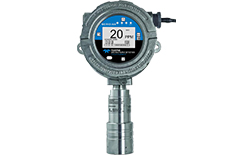
Teledyne Gas and Flame Meridian
Teledyne Gas and Flame Meridian details: Fixed Gas Detectors-Designed with safety and reliability in mind, the Meridian universal gas detector is suitable for use in
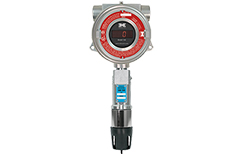
Teledyne Gas and Flame Model 100
Teledyne Gas and Flame Model 100 details: Fixed Gas Detectors-Model DM-100 Series sensors feature intelligent electronics, non-intrusive operator interface and comprehensive fault diagnostics. The sensor
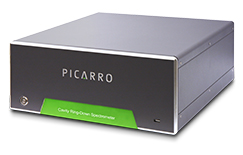
Picarro G2106
Picarro G2106 details: Trace gas analyser-The Picarro G2106 gas concentration analyzer provides precise, realtime measurement of ethylene (C2H4) and water (H2O) vapor at parts-per-billion (ppb)
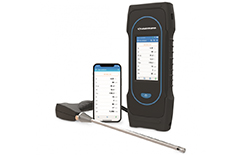
Sauermann Si-CA 230
Sauermann Si-CA 230 details: With double the number of cells and expanded measurement capabilities, the Si-CA 230 is suited to the most powerful industrial machines.
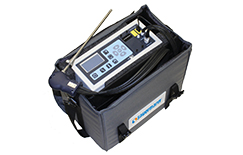
Sauermann Si-CA 8500
Sauermann Si-CA 8500 details: Accurate, reliable, robust & fast, the Si-CA 8500 Combustion Analyzer is the most powerful and advanced portable emissions analyzer on the
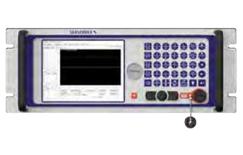
Servomex SERVOPRO CHROMA
Servomex SERVOPRO CHROMA details: Offering a non-depleting Plasma Emission Detector (PED), Flame Ionization Detector (FID) and Thermal Conductivity Detector (TCD). The Chroma analyzer is one
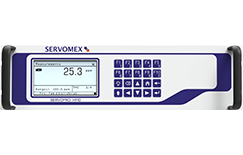
Servomex SERVOPRO HFID
Servomex SERVOPRO HFIDSERVOPRO HFID details: Using a highly sensitive heated Flame Ionization Detector (HFID) for measuring volatile hydrocarbon concentrations in industrial or vehicle emission applications.
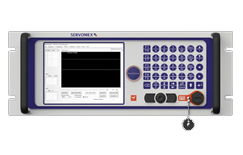
Servomex SERVOPRO NanoChrome
Servomex SERVOPRO NanoChrome details: A gas chromatography-based solution for ultra-trace purity measurements in the semiconductor industry, sub-ppb trace measurement
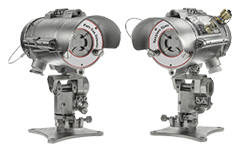
Teledyne Gas and Flame Spyglass
Teledyne Gas and Flame Spyglass details: Open Path-The Spyglass Open Path Detector is an innovative, next generation solution to open path combustible gas detection. It